
Bloomington Previous Residents by Era
Different sources take over at different points in a Bloomington address history. Digital deed access is strongest for recent transfers. Printed indexes, maps, directories, and microfilm carry the trail farther back. The best first source depends on the date and whether the goal is an owner, a listed occupant, or a full household.
| Historical source | Documented span | Custodian or collection | Address evidence |
|---|---|---|---|
| Recorder and Doxpop | January 1991 to present online | Monroe County Recorder | Parties, dates, instruments, legal descriptions, images |
| Combined deed index | 1811–1926 | History Center, Recorder, State Library | Grantor or grantee lead into deed books |
| Bloomington directories | 1900 to current identified; 1920–1923 digitized | MCPL, History Center, IU, Indiana Memory | Dated name, phone, address, street listing |
| Sanborn maps | 1883–1937 in listed editions | MCPL, IU, Library of Congress | Building, block, number, and street continuity |
| Federal census | 1790–1950 public schedules | MCPL, State Library, NARA | Household at the enumeration date |
| Probate and obituary records | Series-specific | History Center, Clerk, MCPL, State Library | Heirs, decedents, cases, and family links |
For a recent address, start with the parcel and deed. For a twentieth-century occupant, begin with a directory near the target year, then verify it with the parcel and census. For an early owner, use the combined deed index and original volume. A map is the bridge when the place stays put but its street number changes.
Walk Monroe Deeds Backward
The deed chain begins with today’s mapped parcel. Use the Monroe County Beacon viewer to capture the owner, PIN, property address, and legal lot or subdivision. Then move to the Recorder. A stable legal description is often more useful than a street number that changed.
- Save the owner, PIN, situs address, mailing address, legal description, and search date.
- Find the current purchase in Doxpop. Confirm party role, recording date, instrument number, legal description, and image.
- Take the seller, or grantor, and search that person as a grantee for the earlier purchase.
- Repeat. When the address fails, search the subdivision, lot, block, section, range, and name variants.
- At the January 1991 online boundary, move to staff, books, microfilm, historical indexes, and State Library holdings.
- Grantor and grantee
- The grantor transfers an interest; the grantee receives it.
- Chain of title
- The linked sequence of recorded transfers for the same land.
- Legal description
- Lot, block, subdivision, or survey language that identifies land apart from its mailing address.
- Criss-cross directory
- A street-arranged directory used to move from a house number to a listed name in a stated year.
A transfer can identify an owner without identifying every person who lived there. Keep ownership and occupancy in separate columns.
Bloomington’s 1811 Deed Bridge
Monroe County’s record trail crosses two sharp access boundaries. Doxpop begins in January 1991, while the History Center combined grantee index reaches from 1811 through 1926. That early date predates the county’s 1818 creation from Orange County, so jurisdiction and original volume matter.
The combined Monroe grantee index provides an entry to the paper era.
An index hit is a lead. Record the name, volume, page, date, and legal clue, then request the original deed. Recorder staff, the History Center, and the State Library form the older access chain.
Note: A missing Doxpop result may mean the online index is too new; it does not show that no deed exists.
Pair Bloomington Directories and Census
Deeds answer ownership questions. Previous residents often appear more clearly in dated directories and census schedules. Bloomington directories are identified from 1900 forward. The digitized 1920–21–22 volume documents householders arranged by street and consecutive house number. That supplies the local address-to-name function even though no separate title called “criss-cross” was found.
- Search the exact address in the closest directory year. Copy the entry, phone, spelling, page, and publication title.
- Check the year before and after. A move, omission, or number shift may appear only across editions.
- Use the alphabetical section to confirm the name, then compare the public census closest to that date.
- Record household members and relationships only as the census states them at enumeration time.
- Return to a parcel, deed, map, obituary, or probate file to test the link to the same place.
The collections and shelf locations are covered in the Bloomington city directory. Here, their value is year-to-year change, not a claim that one edition lists everyone.
Map Bloomington Before the Name
Sanborn maps can keep the physical site in view when names and numbers fail. Bloomington editions are documented for 1883, 1887, 1892, 1898, 1907, 1913, 1927, and 1927–1937. They may show the footprint, height, use, materials, street width, block, and house number. Plat maps add lot and boundary context.
Compare a sheet with directory years on each side. If the number changes but the block shape, lot, and structure align, carry both address forms into the next search. Keep the map year and sheet. No single official local renumbering chronology was found, so the evidence should show how the match was made.
A map does not name all past residents. It proves place context. A directory, census, deed, or dated case file must supply the person relationship.
Search Indiana Archives by County
Some older trails become a finding-aid task. Research Indiana can filter archival material across land, court, naturalization, military, coroner, business, education, and other categories. A result may identify a box, reel, or series rather than an online image.
The official archive interface is shown below.
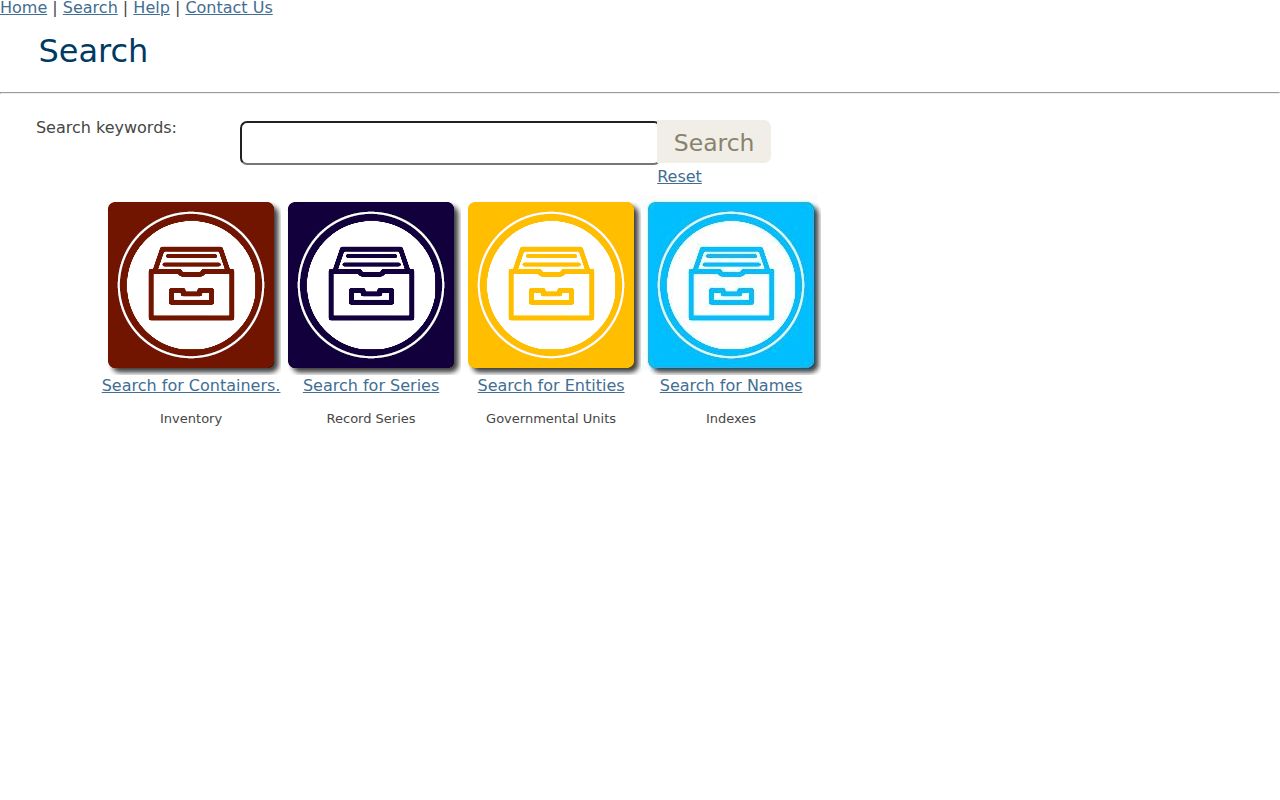
Preserve the repository, series, county, category, item description, and access status. That citation lets staff locate the original.
Bloomington Probate Closes Gaps
Probate and obituaries can connect a property trail to heirs, relatives, and later addresses. The History Center has a historical probate index. State Library holdings include probate abstracts for 1818–1872 and will books for 1873–1904, with court and probate microfilm for other spans. Current original files route through the Monroe County Clerk.
Search an owner or listed occupant by full name and variants. A probate entry can supply an estate, guardian, heir, or case lead, but it may not include the address. Match it back to a deed, directory, or legal description. For obituary requests, the State Library recommends a full name, married or maiden name, and a death, burial, or funeral date.
These sources can mark the end of one person’s link to the property. They do not show that every relative shared the home.
Build Bloomington History at MCPL
The Monroe County Public Library Indiana Room is the local fallback when a previous-residents trail cannot be completed online. Its house-history method starts with the current owner in county GIS or Recorder transfer material. It then moves backward through deed indexes, city directories, Sanborn maps, plat maps, county histories, obituaries, census schedules, the Monroe County Index, and the local timeline. That order keeps the parcel fixed while names change.
The Indiana Room is at 303 E Kirkwood Avenue and can be reached at 812-349-3050 or indianaroom@mcpl.info. Appointments are encouraged but not required, and free scanning is available. Ask staff for the exact directory year, map sheet, newspaper date, or deed-index segment rather than for a broad list of people tied to an address. A focused request is easier to reproduce and more likely to reach the correct shelf, reel, or local index.
Library holdings include Bloomington directories identified from 1900 forward, local newspapers on microfilm, family histories, plat maps, community collections, yearbook material, and obituary indexes. The directory coverage is limited to addresses inside Bloomington city limits at the time of publication. An omission may reflect an old boundary, publication choice, spelling difference, or missing volume. It does not prove that no one lived at the property.
For each library find, record the publication title, year, page, address as printed, listed name, phone when present, and repository. Scan the title page or citation details along with the entry when permitted. If an address appears under two number forms, compare the nearest Sanborn sheet and plat before deciding they describe the same building. This Bloomington previous residents method preserves the source trail even when the answer remains uncertain.
Monroe Records Beyond Portals
The Indiana State Library Monroe guide brings together deeds, court books, marriages, naturalizations, probate, wills, coroner inquests, WPA indexes, tax sources, and local histories.
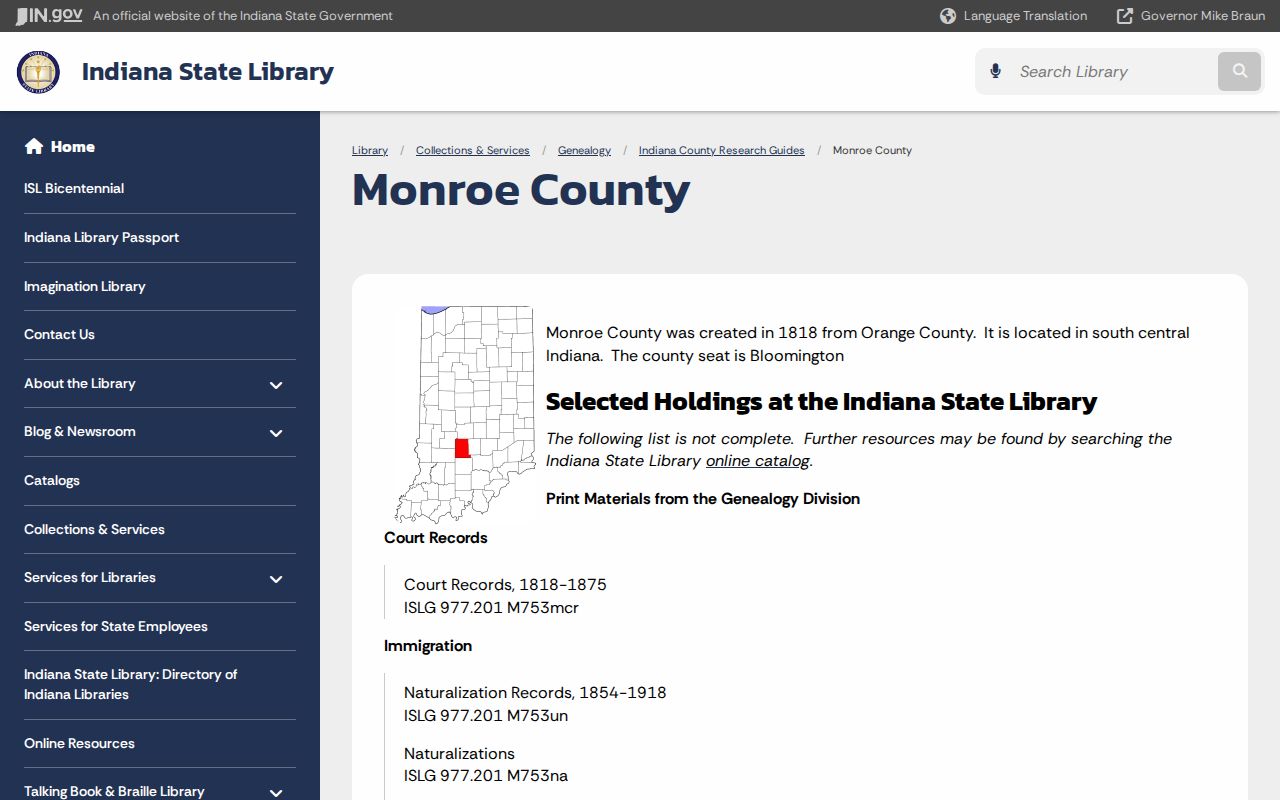
The guide makes the fallback clear: index first, then reel, volume, or custodian. A missing online image is not proof that the original record disappeared.
Verify Bloomington Past Households
A sound account of Bloomington previous residents labels every person by year and role. “Owner” comes from a parcel or deed. “Listed occupant” comes from a directory. “Household member” comes from a census. “Heir” or “decedent” comes from probate or obituary evidence. Roles may overlap, but they should not be merged without support.
Build a log with year, source, exact name and address, parcel or legal description, role, page or image, and uncertainty. Conflicts are normal. A directory can omit a place outside city limits. A parcel can split. A married name can replace a maiden name. A census records one date, not a decade.
For current parcel and street work, use the Bloomington street directory. For the historical trail, stop where the source no longer supports the same person or place.
Lawful use. Research Bloomington past residents for house history, genealogy, and lawful personal study. Never use a record trail to harass or track a living person.