
Finding Bloomington Residents
Choose the record by what is known. An address belongs first in the Monroe County parcel search. A full name can be checked in the court party index, voter self-lookup, deed index, and older directories. A historical year points toward the Indiana Room, Monroe County History Center, or Indiana Memory. These sources describe owners, registered voters, named parties, or listed householders. None is a complete list of everyone at a home.
The strongest Bloomington residents directory result comes from two independent records that agree. A parcel card and deed may confirm ownership, while a city directory can show who was listed at the address in one publication year. Renters and unlisted household members often leave no address-keyed public entry. Treat a mailing address, court party address, and property situs as separate facts.
- Search Monroe County Beacon by address or owner, then record the parcel identifier.
- Use Indiana Voters only for the registration tools and public access the state permits.
- Check the Recorder’s party-name index for deeds, mortgages, liens, and other instruments.
- For an older household, compare adjacent years in Bloomington’s city directory collections.
- When a record is not online, ask its custodian for a narrow search or inspection under APRA.
Bloomington Parcel Records Decoded
Beacon and the county ArcGIS layer give the best address-first orientation. Search fields include an owner name, property street, tax ID, state parcel number, sales information, and legal lot or subdivision data. A parcel is a mapped unit of land. Its situs is the physical property address; the owner mailing field is where tax mail goes. Those two addresses may differ, so an owner entry is not proof of residence.
The official parcel layer exposes both sets of fields, which makes that distinction visible. The Assessor can also print property-record and sales information, while the county-linked LowTaxInfo search accepts owner, address, parcel, or duplicate number and shows tax history back to pay year 2016. The full address workflow belongs in the Bloomington street directory.
Monroe County GIS explains the current viewer and links to Beacon.
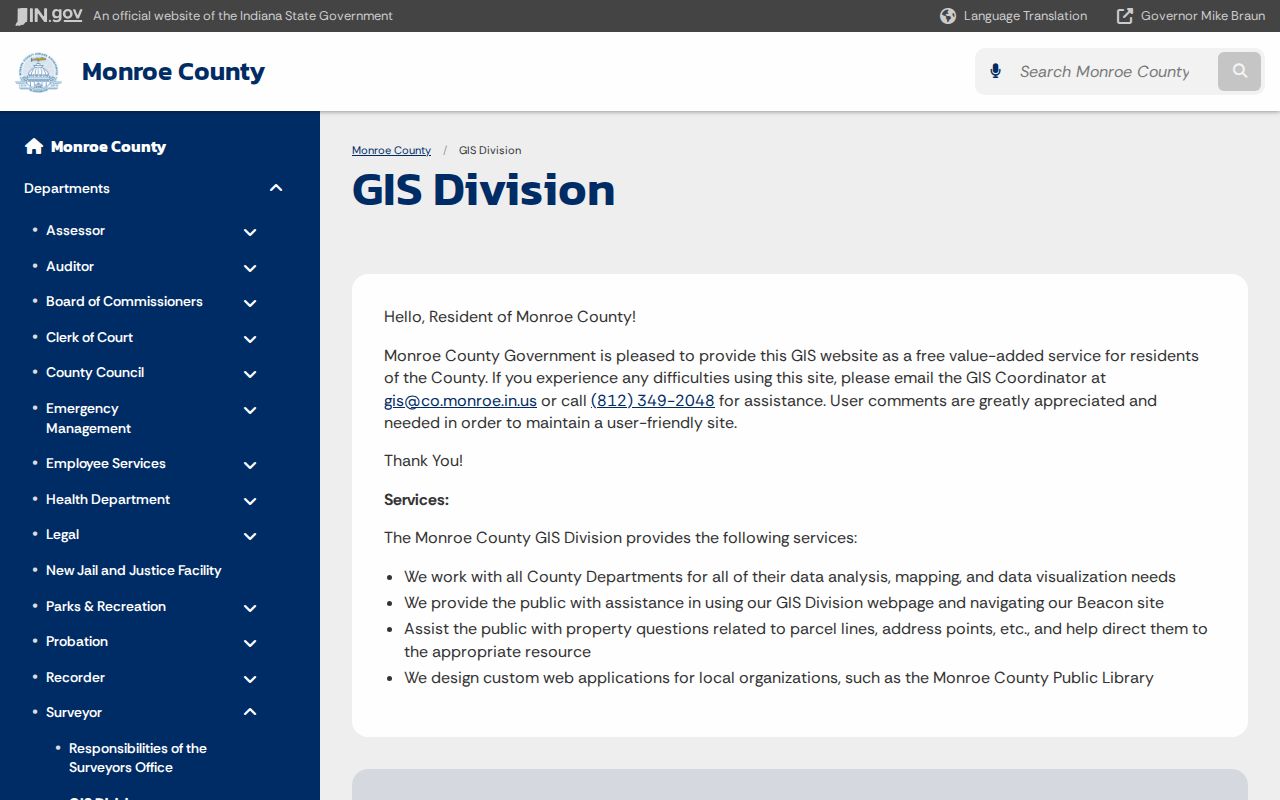
The county landing page matters because old instructions may still refer to Elevate, the retired viewer replaced during the Schneider migration.
Bloomington Records Office Desk
Bloomington is the Monroe County seat, so several core resident records are kept within a few downtown blocks. The Recorder handles land instruments. The Assessor maintains parcel characteristics, ownership fields, assessed values, and sales. The Clerk maintains court files, marriage licenses, voter administration, probate, and other filings. Ask each office for the record it actually keeps, not a newly compiled list of residents.
Monroe County Recorder
100 W Kirkwood Ave, Room 122
Bloomington, IN 47404
812-349-2520
Recorded instruments and copies
Monroe County Assessor
100 W Kirkwood Ave
Bloomington, IN 47404
812-349-2502
Property cards and assessments
Monroe County Clerk
301 N College Ave, Suite 201
Bloomington, IN 47404
812-349-2614
Court, marriage, and election records
All three offices generally list weekday hours of 8:00 a.m. to 4:00 p.m. The Recorder says submissions after 3:30 p.m. move to the next business day. Call before a trip when an older book, certified copy, or staff search is needed.
The Clerk is the right desk for an accessible court file, marriage record, probate matter, or voter-administration question. Vital certificates instead go to the Monroe County Health Department at 119 W 7th Street or the Indiana Department of Health. GIS staff can explain parcel layers, but the Assessor remains the custodian for property cards and valuation records. Keeping those roles straight saves a request from being transferred or denied because it reached the wrong office.
Bloomington Deeds Across Two Eras
Recorded documents split at a practical digital boundary. Doxpop covers Monroe County instruments from January 1991 forward and offers residents six free searches each month. Search by party name and region, then use an instrument number, recording date, document type, or short legal description to keep the result tied to the correct parcel. A deed names parties to a transfer; it does not establish that either party occupies the land.
Older work goes through the Recorder, historical indexes, and local archives. The History Center’s combined grantee index reaches from 1811 through 1926, even though Monroe County was created in 1818. That makes the index a useful bridge for early land. Ask the Recorder for a name or short-legal-description search when the web index stops, and request copies separately. The office says most deeds run one to three pages and lists copies at $1 per page, but verify the current charge.
The Recorder describes online and counter access in one place.
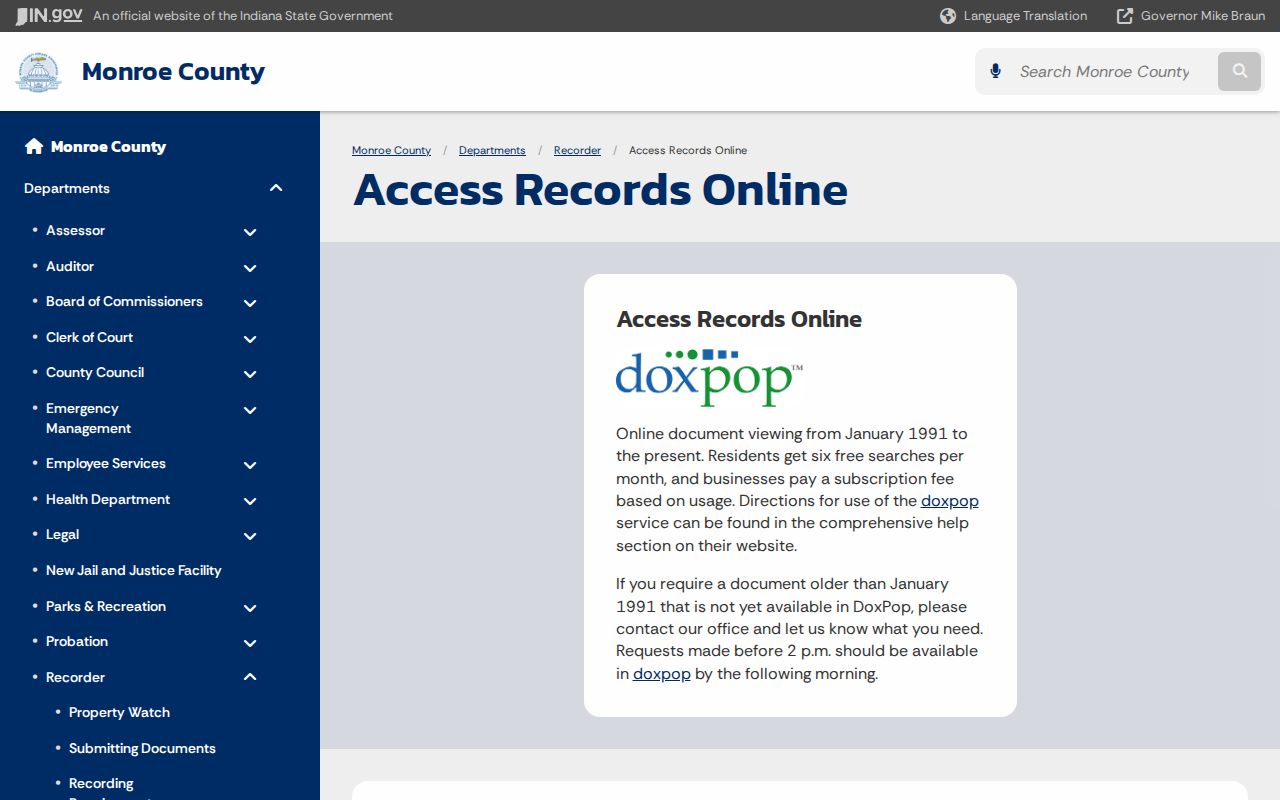
The page’s coverage note prevents a failed search from being mistaken for proof that no older instrument exists.
Current Bloomington Resident Rolls
Modern directories of Bloomington residents are purpose-built rolls, not one master roster. Their entries mean different things and update on different schedules. Use the table to pick a source, then confirm important details with the custodian.
| Bloomington source | Relationship shown | Record keeper | How to reach it |
|---|---|---|---|
| Beacon and property cards | Parcel owner and tax mailing data | Monroe County Assessor/GIS | Free web search, print function, or office request |
| Indiana Voters | Registration confirmation and election details | State and county election officials | Online self-lookup; record requests have limits |
| Doxpop recorder index | Named parties to recorded instruments | Monroe County Recorder | Limited free web searches, subscription, or office |
| MyCase | Parties in public court cases | Indiana courts and Monroe Clerk | Free online docket; Clerk for accessible file |
| City boards and staff pages | Public officials, members, and roles | City of Bloomington | Online rosters, minutes, or records request |
A property owner may live elsewhere. A court party may never have lived in Bloomington. Voter access is controlled by Indiana law, and protected fields are withheld. A Bloomington resident lookup should confirm one person without merging unlike records.
Searching Bloomington Court Names
Indiana MyCase has Case, Name, and Attorney search modes. A name search can include first, middle, last, date of birth, court, status, and filing-date limits. Wildcards and a sounds-like option help with spelling variants. Results can show parties, case type, filing, chronology, disposition, and links to documents that are public.
| Search control | Use in a Bloomington name check |
|---|---|
| Name | Add first or middle data to separate common surnames. |
| Court | Narrow to Monroe when the matter is local. |
| Status | Choose all, open, or closed cases. |
| Date range | Limit results to a known event period. |
| Sounds-like or wildcard | Test variant spellings without assuming a match. |
MyCase is not the complete courthouse file. Rule 5 restricts confidential, sealed, expunged, juvenile, mental-health, and protected information. Some accessible documents still require the Monroe Clerk. Federal matters for Monroe County use PACER in the Southern District of Indiana, not the state portal.
Open the official court name search before comparing a possible match.
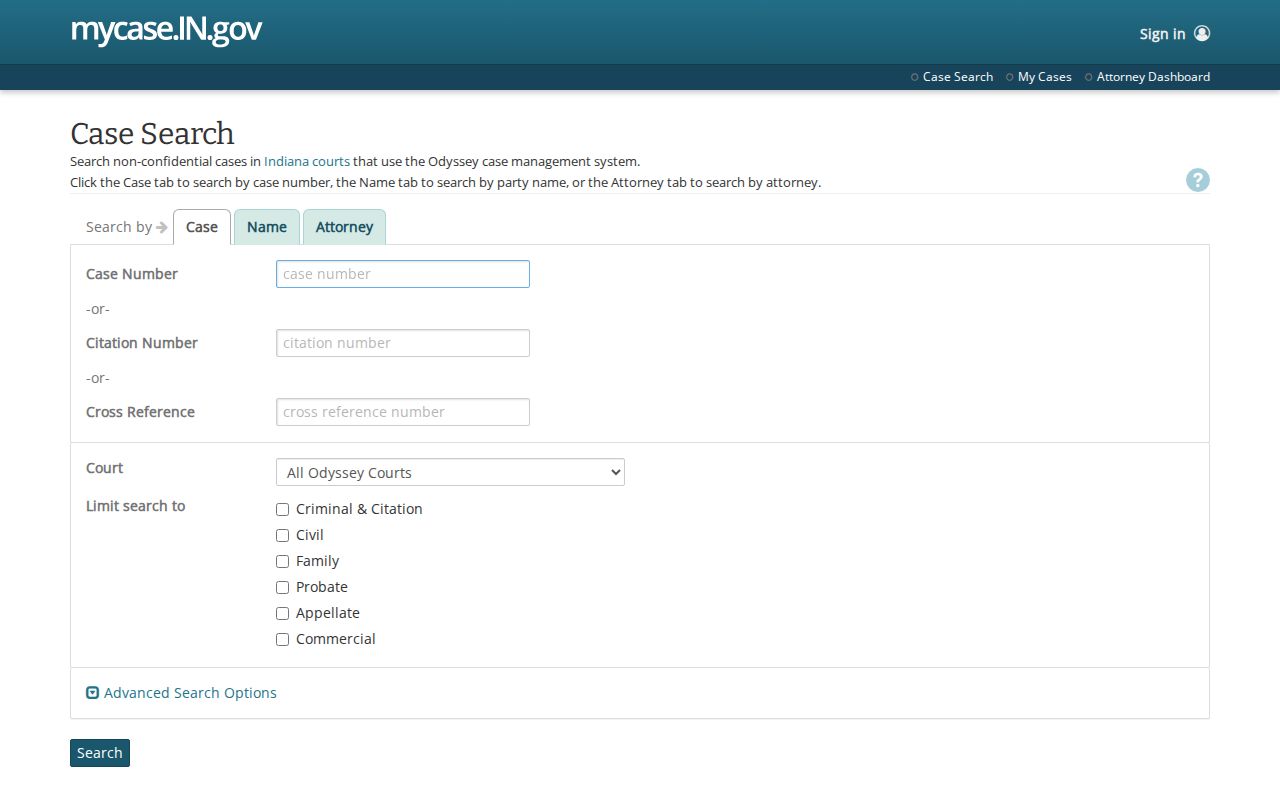
The search screen’s filters are essential when several people share a name.
Bloomington Voter Record Boundaries
The Indiana Voters portal supports registration confirmation, polling-place details, ballots, absentee information, and county contacts. The statewide system uses pending, active, inactive, and cancelled concepts. Status describes the election record, not where a person is physically located on the day of a search.
Indiana voter records are generally public under the Access to Public Records Act, but redactions, use limits, confidential fields, and the Address Confidentiality Program apply. Eligible survivors can use a substitute address through ACP. A public request goes to the election custodian and may use state form VRG-24; the portal itself should not be treated as an unrestricted neighborhood roster.
Registration data also changes with election administration. Pending, inactive, or cancelled status cannot be used to infer a move without more evidence. If the goal is to reconnect with someone, compare a lawful public field with a separate source and avoid contacting a protected or unwilling person.
The state portal is the official starting point.
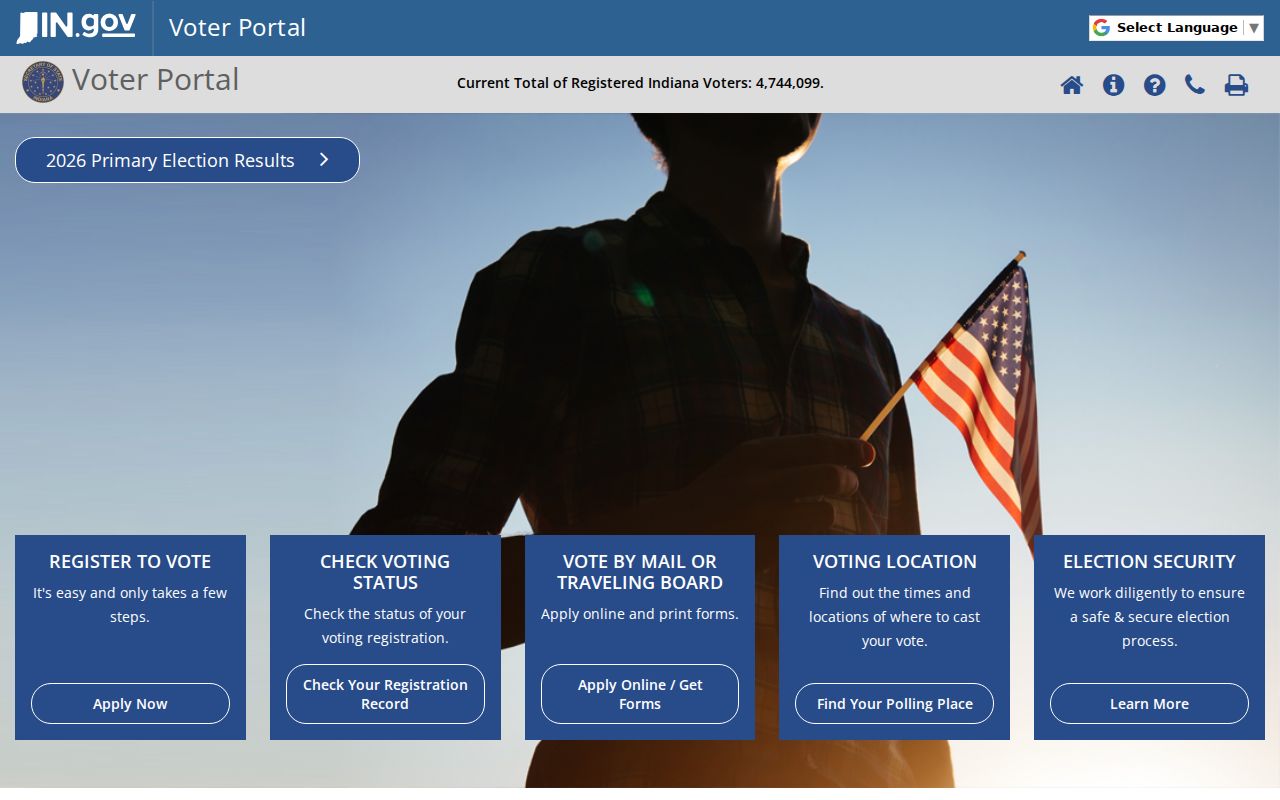
Use it for its stated election functions and honor every confidentiality limit.
Bloomington Vital Record Changes
The Monroe County Health Department keeps local birth and death records from 1882 forward and accepts eligible requests in person or by mail. Statewide orders go through the Indiana Department of Health. A certified copy is an official copy issued by the custodian; it is different from an index entry that only points toward an event.
Indiana changed public access to birth and stillbirth records in 2025. Under IC 16-37-1-7.5, the threshold became 99 years on July 1, 2025. Older library guides may still say 75 years, so current law and custodian rules control. Death records have a separate 75-year and APRA framework. Adoption records, recent births, and other restricted files require the proper eligibility route.
Review Monroe County’s current birth and death instructions before sending payment or ID.
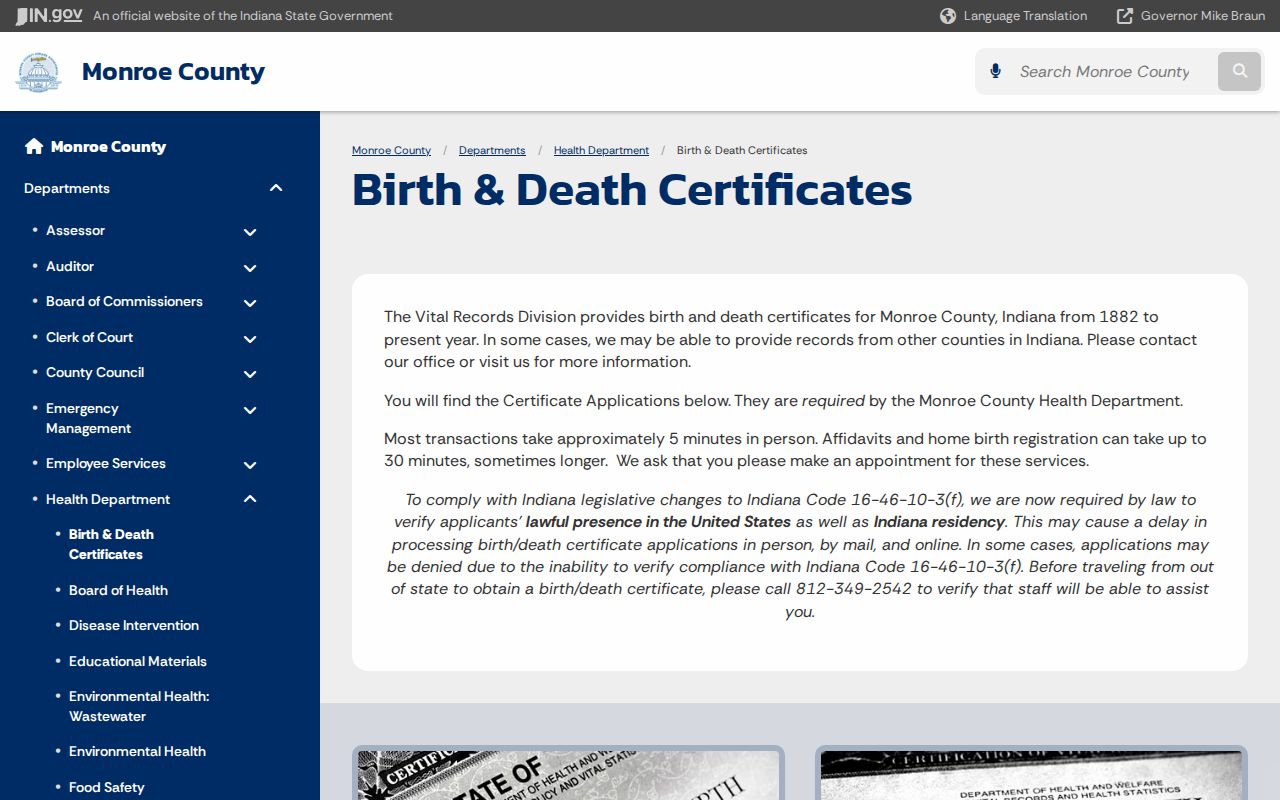
The local page distinguishes county service from the statewide IDOH order route.
Historical Bloomington Directory Shelves
The Monroe County Public Library house-history guide identifies Bloomington city directories from 1900 to current holdings, limited to addresses inside the city limits at the time of publication. The Indiana Room at 303 E Kirkwood Avenue keeps directories, newspapers on microfilm, maps, the Monroe County Index, obituaries, yearbooks, family histories, and local databases. Appointments are encouraged but not required, and free scanning is available.
Indiana Memory provides open page images and transcripts for the 1920-21-22 and 1922-1923 city directories. The first includes alphabetical names plus householders arranged by street and consecutive house number, which gives Bloomington a documented address-to-name method even though no separately titled criss-cross volume was located. A 1951 telephone directory is also digitized. Compare adjacent years because spelling, inclusion, house numbering, and city boundaries change.
The Bloomington city directory collections page covers the shelf in full. It also explains how to pair an entry with deeds, census records, obituaries, and maps.
Inside Bloomington’s Indiana Room
MCPL’s Indiana Room is the practical fallback when an online name search ends. Its Monroe County Index and Obituary Index can point to a source that is not fully digitized. Staff can also help locate newspaper microfilm, community collections, plat maps, Sanborn maps, clipping files, and yearbooks. Record the exact title, year, page, and spelling for every hit so another researcher can reproduce the result.
The Monroe County History Center adds historic deed, court, probate, tax-duplicate, obituary, and vertical-file resources. The Indiana State Library adds Indiana Legacy, county guides, newspapers, cemetery tools, and microfilm. Research Indiana searches state archival descriptions for land, court, naturalization, military, coroner, business, education, and other series. An archival hit may identify a box or reel rather than provide an image.
For obituaries, bring a full name, approximate death date, and place. The State Library’s genealogy service describes a $5 obituary copy route, while local newspaper access can vary by database or microfilm. Cemetery records, probate files, and obituary notices often connect relatives, but each should be cited as its own source rather than blended into a single unsourced family tree.
See the library’s current Indiana Room entry points.
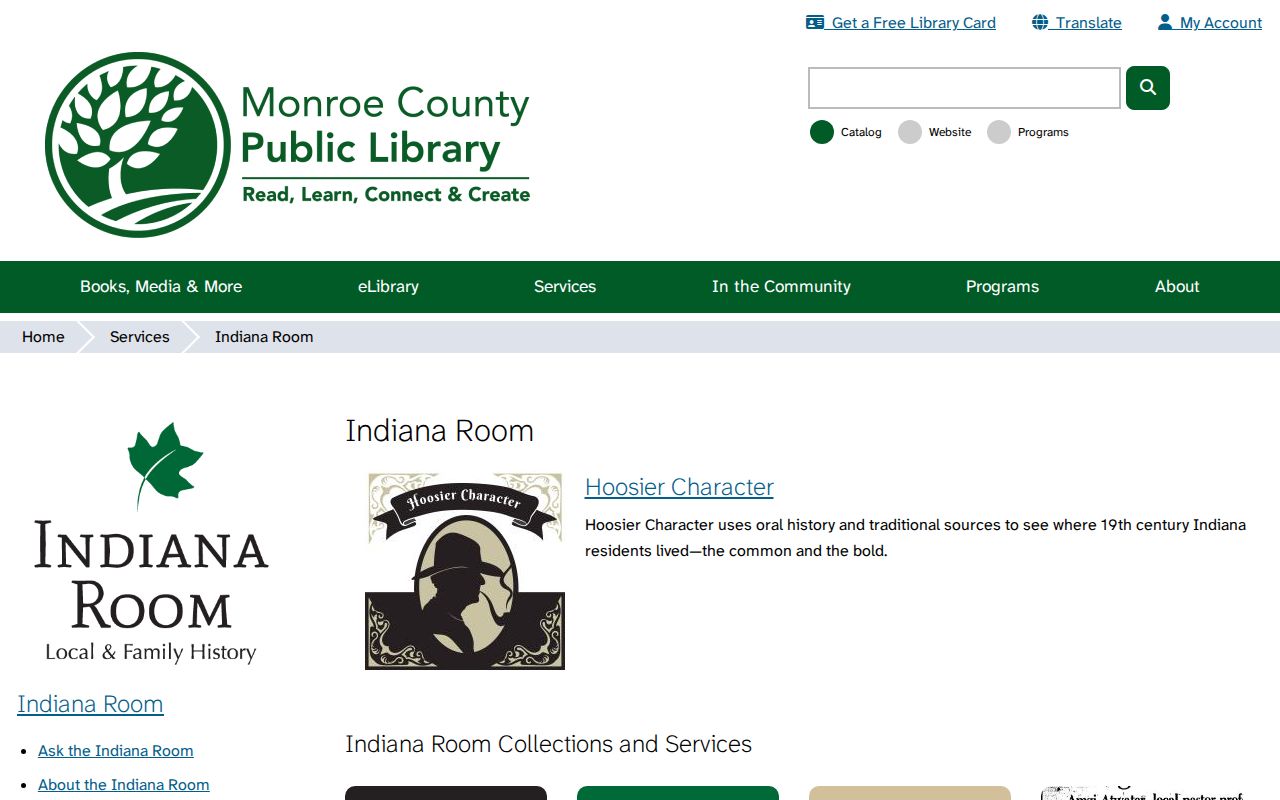
The mix of indexes and physical collections is why a no-result web search is not the end of Bloomington research.
Requesting Bloomington Public Records
Indiana’s Access to Public Records Act, IC 5-14-3, covers existing public records held by city, county, and state agencies. A request should name the custodian, record type, date span, and a useful identifier such as a parcel, case, instrument, exact address, or person. An office generally does not have to create a new resident list, interpret data, or answer a broad research question.
The Public Access Counselor handbook says oral or in-person requests are acknowledged within 24 business hours, while mail, email, and fax requests are acknowledged within seven calendar days. Those are response rules, not guaranteed production dates. Inspection is generally free. Copy costs and special statutory fees vary. A denial must be written, identify its legal basis, and name the responsible official.
For police material, Bloomington accepts public-information requests for items such as daily logs, reports, statistics, photographs, audio, and video. Investigatory and privacy exemptions can limit release. State courts use their own request path and Rule 5, while federal court dockets use PACER. APRA does not turn every record held by a public body into an open record.
Ask for the record, not an answer. “Property card for parcel X” is clearer than “tell me who lives there.”
Reading Bloomington Directory Evidence
Terms that look alike can describe very different relationships. Keep the label attached to every result. This makes a Bloomington residents directory search useful without turning an uncertain clue into a claim about a living person.
- Parcel
- A mapped unit of land with tax and legal identifiers.
- Index
- A finding tool that points to a record; it is not always the full document.
- Grantor and grantee
- The party transferring an interest and the party receiving it.
- Docket
- The chronological list of activity in a court case.
- Directory entry
- A name, address, or phone listing for one publication year.
For family history, estate work, reconnecting, property curiosity, or scam avoidance, save source details and check the official record. Do not use resident information to watch, threaten, stalk, harass, or harm anyone. Protected addresses and sealed records must remain protected.